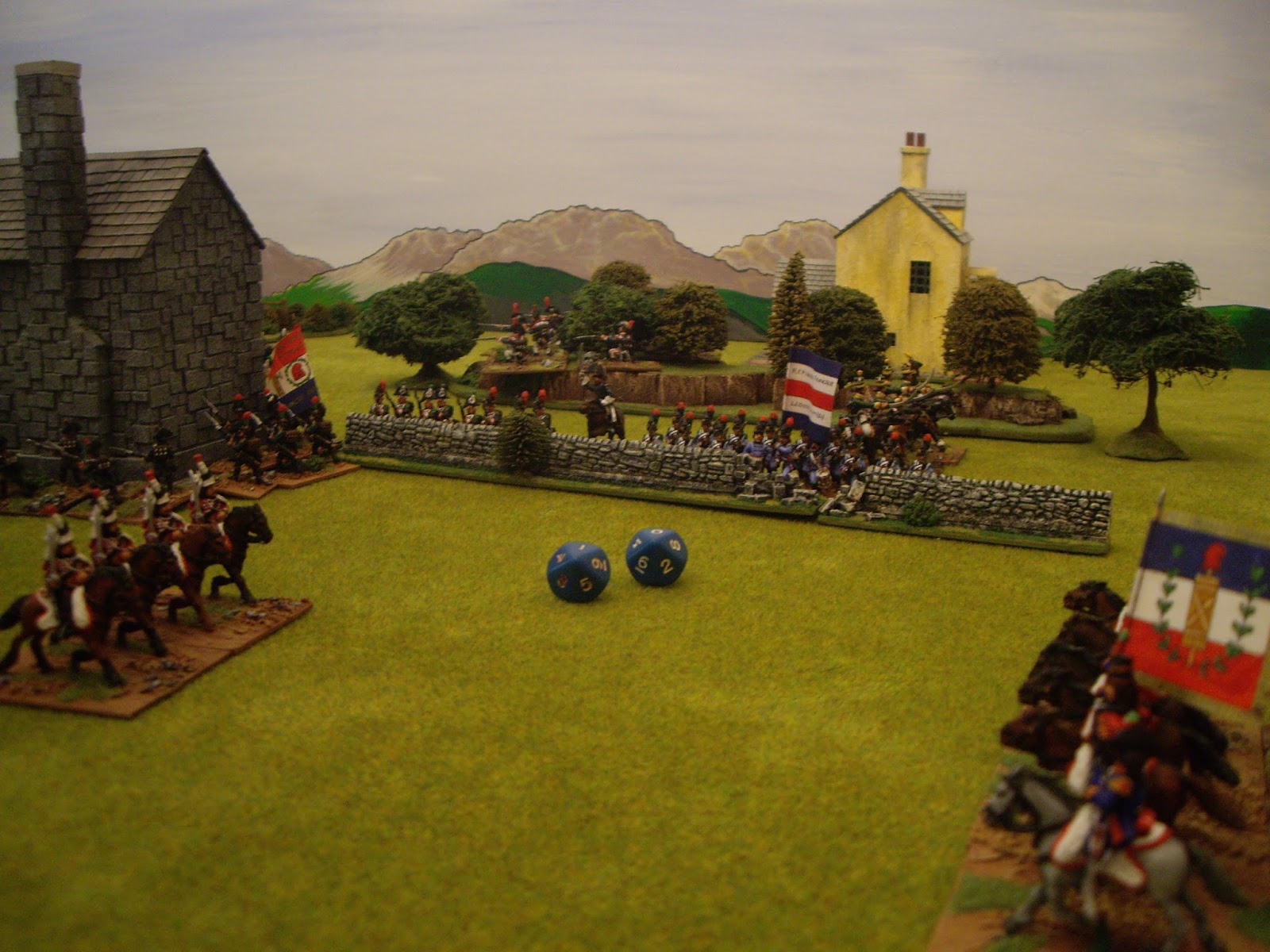
The garrison commander had wisely established several outworks where company strong units had been posted to forewarn of any likely attacks. And, every MOVE, the garrison commander would dice to see if they fired a flare (dice 5 or 6), if this occurred, any unit within 24" of the Allied column should also through a dice to see if they spot the approaching column (dice 5 or 6).
Movement by the allies would be difficult, good or bad there was to be no moonlight for this surprise attack. The Brigade was to comprise a column of three battalions, each formed up in line. A dice would determine the move distance for each battalion.
For the record, the ALARM would comprise shouting for that MOVE, firing could only occur on the following MOVE. A charge move is not determined by dice (8") but usual reductions for terrain may apply, and a dice must be thrown by the garrison to see if the alarm is given during the charge. Or were the sentries fast asleep?
WELL THAT DIDN'T FOLLOW THE PLAN AT ALL
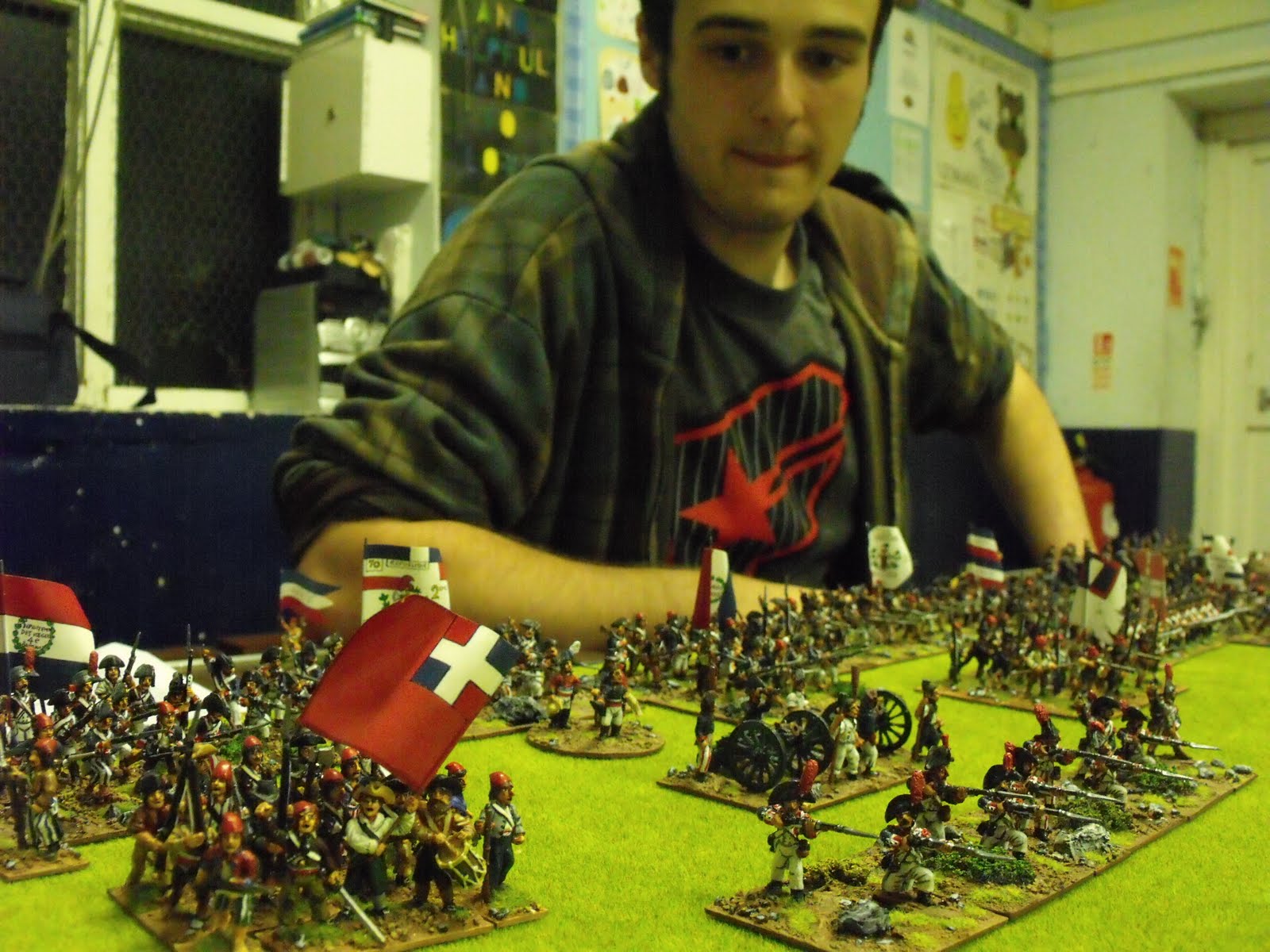
At the agreed time the column set off towards the objective. But the ground was exceedingly boggy and movement was dreadfully slow. The two rear battalions also fell somewhat behind as the ground was now a quagmire. (After four moves the column had barely covered six inches.) The first flare appeared in the sky, but no further reaction. A second flare followed on move six, and a company of grenadiers in a local barn reacted. The total alarm now spread quickly, even the dark could not limit occasional casualties as the column received fire on both flanks, and a battery of 8pdrs opened up on their front. With all hope lost of taking the official position, George, commanding the column, advanced two battalions at the right flank outpost Not particularly fortified and manned by the Batave Legion infantry and some Paris National Guard chasseurs, their musketry could not stop a fair charge, and after a brief melee left the field in a rout. But with casualties mounting, and with no hope of securing the official position, George decided to pull out. Now the French commander, Chris, saw this as no such conclusion, and pursued with his white-coated grenadier company and several companies of Foot Gendarmes. Here, at least, the 18th Regiment of Foot about faced and delivered a volley which scattered the French grenadiers, and the Allied column returned to their camp. Casualties for the Allies on a 1:25 ratio were as follows: Loyal Emigres 500 strong (300 K+W), Light Battalion 500 strong (100 K+W), 18th Foot 500 strong (25 K+W). The Garrison lost: French Grenadiers (50 K+W), Batave Legion (125 K+W), but a further 425 are reported as missing during the night. So, the surprise night attack failed, but that is fate (and Chris is peculiarly lucky with war-games dice!). A special prize to the gallantry of the Loyal Emigres, forced to retire with over 50% casualties but never routing, and also to the accuracy of the French artillery crews.
NOTE This game had two objectives. Firstly to capture some of the stress in carrying out a surprise attack. Secondly, to fight a game which would take no more than two hours to actually set up and play. Both were fully achieved at 1 hour, 57 minutes.
MGB